





Living with mobility issues can involve a range of daily support needs, from personal routines and household tasks to community participation and developing greater independence. Consistent disability care can make these activities easier to manage by providing reliable assistance tailored to an individual’s needs, preferences, and goals.
A familiar and dependable support arrangement can also give participants greater confidence in their routines while helping families and carers manage their responsibilities. With the right support, everyday activities can become more predictable, comfortable and empowering.
Creates Greater Stability in Daily Routines
Consistency can be valuable when managing everyday activities. Having reliable support can help participants establish routines around personal care, appointments, household activities, social participation, and other important tasks.
For individuals seeking disability care in Brocklehurst, a consistent support arrangement can provide assistance that fits naturally into established routines. This can make it easier to plan each day and focus on personal goals.
Builds Trust and Familiarity
A positive relationship between a participant and their support worker can make receiving assistance more comfortable. Familiarity allows support workers to better understand communication preferences, routines, interests, and individual requirements.
A consistent NDIS support worker in Eulomogo can become familiar with how a participant prefers to complete everyday activities. This understanding can help create a more personalised support experience while respecting the participant’s choices and independence.
Supports Independence and Skill Development
Disability care is not simply about completing tasks for someone. Appropriate support can encourage participants to take an active role in activities they are capable of managing. A support worker may provide guidance with daily living tasks, community activities or skill development while allowing the participant to make choices and complete tasks independently where possible.
For participants working with an NDIS support worker in Mogriguy, consistent assistance can help reinforce routines and provide opportunities to practise skills over time.
Makes Community Participation Easier
Regular support can also help participants engage with their local community. Depending on individual needs and goals, assistance may include attending appointments, shopping, visiting community spaces, participating in recreational activities, or connecting with others.
Having familiar support can make these activities easier to plan and may give participants greater confidence when navigating different environments.
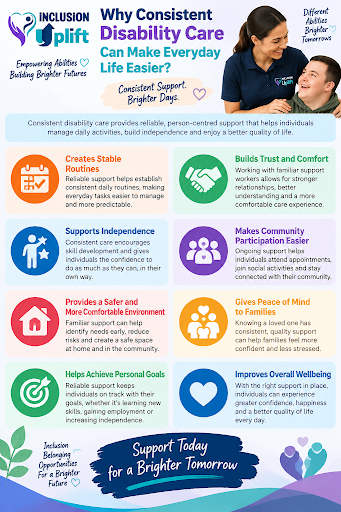
Provides Peace of Mind for Families
Consistent disability care can also benefit family members and informal carers. Knowing that a loved one has reliable support can help families manage their own work, household and personal responsibilities. Professional support can complement existing family care arrangements and help create a more balanced approach to ongoing support.
Consistent disability care can make everyday life easier by creating predictable routines, building trust, supporting independence and helping participants remain engaged with their communities. Personalised support can also provide families with greater confidence that their loved one’s needs are being addressed respectfully. The right support arrangement should reflect each participant’s circumstances, preferences and goals, with flexibility to adapt as their needs change.
Why is consistency important in disability care?
Consistency can help participants develop familiarity and trust with their support workers. It can also help support workers understand individual preferences, communication styles, routines and goals.
Can consistent disability care support independence?
Yes. Appropriate disability care can encourage participants to complete tasks they can manage independently while providing assistance where required. This approach can support confidence, skill development and greater independence.
How does consistent care benefit families and carers?
Reliable professional support can help families share caregiving responsibilities. This may give informal carers more time to manage work, household responsibilities, appointments and their own wellbeing.
What daily activities can disability care support?
Depending on individual needs and an agreed support plan, assistance may include personal care, daily living activities, household routines, appointments, community access and social participation.
Can a consistent support worker help build trust?
Yes. Regular interaction with a familiar support worker can help establish a trusting professional relationship. Familiarity may also make it easier for participants to communicate their preferences and support needs.
How can disability care support community participation?
A support worker may assist participants with activities such as attending appointments, shopping, recreational activities, social events and other community activities. This can help participants remain connected with their community.
Can disability care routines change as a person's needs change?
Yes. Support arrangements can be reviewed and adjusted when a participant's circumstances, preferences, goals or support needs change. Ongoing communication can help ensure care remains appropriate.
What should families consider when choosing disability care?
Families can consider the provider's experience, person-centred approach, communication practices, staff training, reliability and ability to tailor support to the participant's individual needs and goals.
How can I find suitable disability care services?
Start by identifying the participant's support needs, preferences and goals. You can then discuss available options with disability care providers and ask how their services can be tailored to create a consistent and personalised support routine.
Get Personalised Disability Support
Looking for reliable, person-centred disability support? Inclusion Uplift can help you explore support options designed around individual needs, routines and goals. Contact Inclusion Uplift today to discuss how personalised disability care can make everyday life easier.
Call us at 0480 205 663 or email us at info@inclusionuplift.com.au for more information.