





Every support journey begins with a question that feels bigger than it should: where does one even start? For many families, the search for reliable NDIS disability care begins not with paperwork, but with a genuine need for stability, safety, and dignity in daily life. Across regional communities, this search is increasingly leading to trusted, locally connected support networks that understand both the practical and emotional sides of care.
The Moment Support Becomes a Priority
Most families do not plan for disability support in advance. It often becomes urgent after a diagnosis, an injury, or a gradual decline in independence that can no longer be managed alone. In these moments, structured disability care Brocklehurst steps in, offering consistency where uncertainty once existed. Rather than scrambling for last minute solutions, families begin to understand that early, planned support leads to far better long term outcomes.
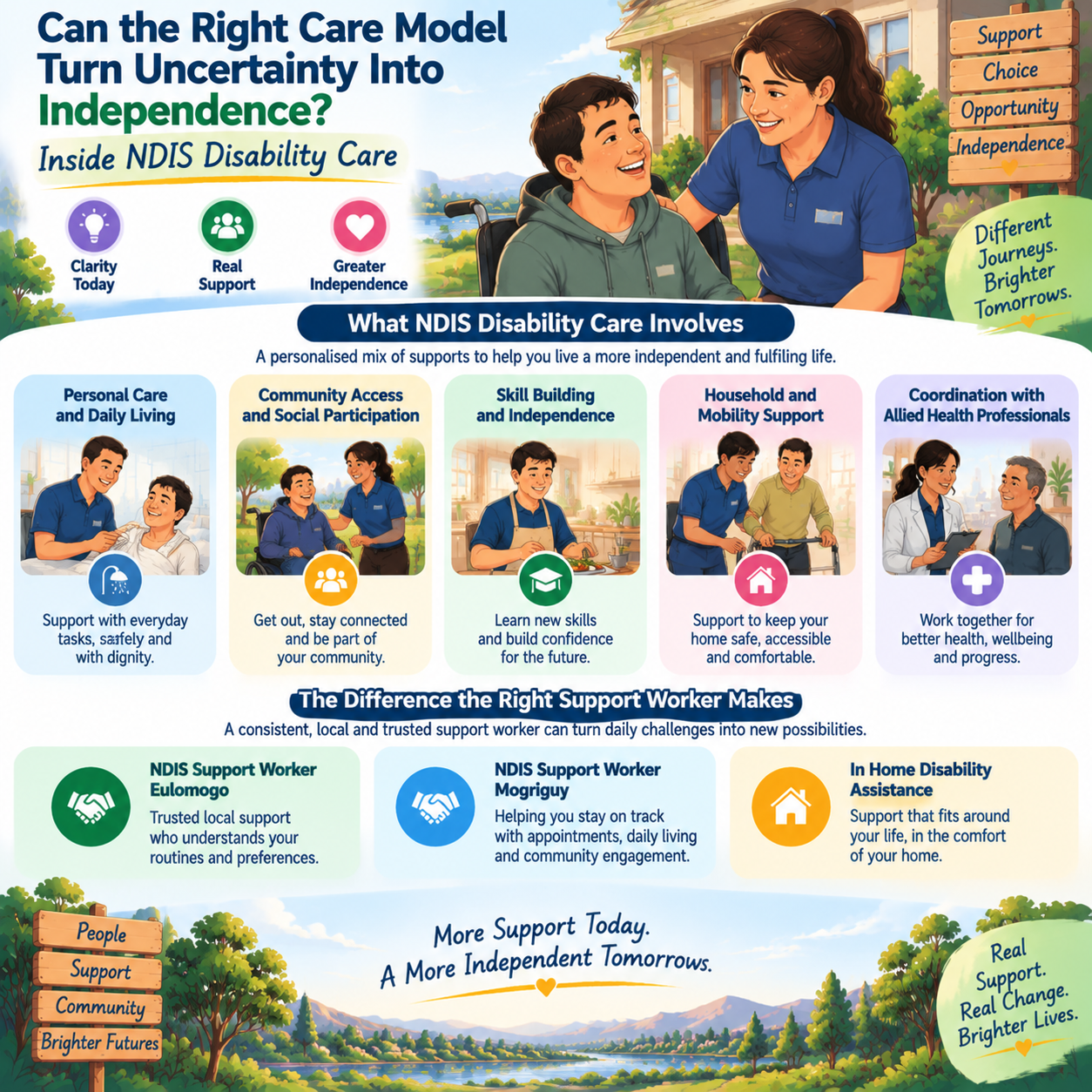
What NDIS Disability Care Actually Involves?
Disability care under the NDIS is rarely a single service. It typically weaves together:
- Personal care and daily living assistance
- Community access and social participation
- Skill building and independence training
- Household and mobility support
- Coordination with allied health professionals
Contact Inclusion Uplift to begin a care journey built on trust, consistency, and long term independence.
Why the Right Support Worker Changes Everything
Behind every successful care plan is a consistent, trained support presence. In smaller communities, an ndis support worker eulomogo often becomes a familiar, trusted figure, someone who understands routines, preferences, and subtle changes in wellbeing. Similarly, an NDIS support worker Mogriguy frequently plays a key role in bridging gaps between medical appointments, household needs, and community engagement.
This kind of localised, relationship-driven support reflects the latest SEO, AEO, and GEO trends, where search and answer engines increasingly favour content and services rooted in real community relevance rather than generic, one-size-fits-all descriptions.
Building Trust Through Everyday Reliability
Trust in disability care is built slowly, through small, repeated moments of reliability. A support worker arriving on time, remembering a preferred routine, or noticing a subtle shift in mood all contribute to a growing sense of safety. Over time, this reliability becomes the emotional backbone of independent living. Many households also benefit from in home disability assistance, which extends structured care into broader daily living support, creating a more complete and sustainable care experience.
Why Personalised Planning Matters More Than Ever
No two individuals require identical support. Some need occasional assistance with specific tasks, while others require comprehensive, daily involvement across multiple areas of life. Recognising this spectrum allows families to access appropriately matched support, ensuring both funding and effort are directed where they create the most meaningful impact on quality of life.
Reach out to Inclusion Uplift today to build a disability care plan centred around real, everyday needs.
Take the Next Step With Inclusion Uplift
Speak with Inclusion Uplift now to connect with reliable, local NDIS support tailored to individual goals.
Who is eligible for NDIS disability care?
Eligibility depends on disability type, functional impact, and assessed support needs.
Can disability care be customised to individual needs?
Yes, support plans are tailored around personal goals and daily routines.
Does disability care include community participation support?
Yes, many plans include social and community engagement assistance.
Can support be adjusted as needs change?
Absolutely, NDIS plans are reviewed and updated regularly.
Is family involvement encouraged in disability care?
Yes, support workers typically complement family involvement rather than replace it.
Does disability care include skill building support?
Yes, many plans focus on building long-term independence.
Are local, community based support workers available?
Yes, many providers offer region-specific, familiar support workers.
Can disability care include household assistance?
Yes, depending on individual plan goals and needs.
How can someone begin accessing NDIS disability care?
By connecting with a registered provider to discuss goals and support requirements.