



Developing essential life skills plays an important role in helping NDIS participants achieve greater independence, confidence, and control over their everyday lives. Life skills development focuses on building practical abilities that support individuals in managing daily tasks, making decisions, participating in the community, and working towards personal goals.
At Inclusion Uplift, we understand that every participant has unique abilities, challenges, and aspirations. Our personalised support approach helps individuals strengthen their skills at their own pace while encouraging confidence and independence. Through structured guidance and meaningful activities, participants can develop abilities that improve their overall quality of life.
What Is NDIS Life Skills Development?
NDIS life skills development refers to support services designed to help participants improve their ability to manage everyday activities and achieve greater self-reliance. These skills can include communication, decision-making, household management, personal care, social interaction, and community participation.
Life skills programs are tailored according to each participant’s needs and goals. Support workers focus on creating opportunities for individuals to learn, practise, and apply skills in real-life situations.
How Does Life Skills Development Benefit NDIS Participants?
Life skills development helps NDIS participants gain confidence by providing practical tools to manage everyday challenges. With the right support, individuals can become more independent and actively participate in activities that are meaningful to them.
Key benefits include the following:
- Improved confidence in completing daily tasks
- Greater independence and decision-making ability
- Enhanced communication and social skills
- Increased participation in community activities
- Development of practical skills for everyday living
Professional NDIS life skills development in Dubbo can provide participants with personalised support designed around their goals, helping them build abilities that contribute to a more independent lifestyle.
Why Are Personalised Skill-Building Programs Important?
Every person learns differently, which is why personalised support is essential for effective life skills development. Individualised programs consider a participant’s strengths, interests, preferences, and areas where additional support may be needed.
A personalised approach allows support providers to:
- Create achievable and meaningful goals
- Adapt activities based on individual progress
- Encourage confidence through small achievements
- Provide consistent guidance and encouragement
- Support long-term personal growth
Through tailored development life skills in Brocklehurst, participants can receive support that focuses on improving everyday abilities while respecting their personal choices and independence.
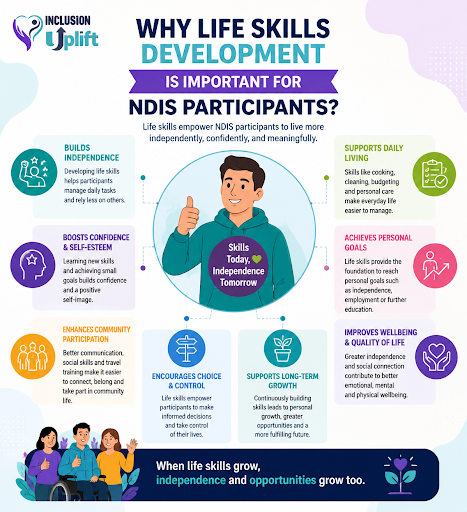
What Skills Can Participants Develop Through NDIS Support?
life skills development programs can focus on a wide range of abilities that support everyday living and personal empowerment.
Common areas of development may include:
- Preparing meals and managing household routines
- Building communication and social interaction skills
- Learning travel and community participation skills
- Improving personal organisation and planning
- Developing confidence in making choices and decisions
These skills help participants become more comfortable managing daily activities while creating opportunities for greater involvement in their communities.
How Inclusion Uplift Supports NDIS Participants?
At Inclusion Uplift, we provide compassionate and personalised support focused on helping NDIS participants reach their individual goals. Our team works alongside participants to identify areas for growth and create practical strategies that encourage independence.
We believe life skills development is about empowering individuals to build confidence, explore opportunities, and participate more actively in everyday life. Our support focuses on respect, inclusion, and helping every participant achieve meaningful progress.
Life skills development is an important part of helping NDIS participants build independence, confidence, and practical abilities for everyday living. With personalised support, individuals can develop valuable skills that improve wellbeing and create opportunities for greater participation.
How does life skills development support independence for NDIS participants?
Life skills development helps NDIS participants gain the abilities needed to complete everyday tasks with less assistance. Learning practical skills such as cooking, cleaning, using public transport, or managing appointments can increase a person’s confidence and reduce reliance on others.
NDIS-funded supports can provide tailored training and guidance based on each participant’s goals, abilities, and support needs, helping them work towards greater independence.
Can life skills training improve confidence and self-esteem?
Yes. Learning and mastering new skills can have a positive impact on confidence and self-esteem. When NDIS participants achieve personal goals, they often feel more capable and empowered to take on new challenges.
Small achievements, such as preparing a meal independently or communicating needs clearly, can create a sense of accomplishment and encourage continued growth.
What types of life skills can NDIS participants develop?
NDIS participants can develop a wide range of life skills depending on their individual goals and support requirements. Common areas include:
- Personal hygiene and self-care
- Cooking and nutrition skills
- Household management
- Money management and budgeting
- Communication skills
- Social skills and relationship building
- Travel training and community access
- Decision-making and problem-solving
- Time management and planning
A personalised approach ensures that skill development focuses on what matters most to each participant.
How does life skills development help with community participation?
Life skills play an important role in helping NDIS participants engage with their communities. Skills such as communication, travel training, and social confidence can make it easier to attend appointments, join social activities, access services, and build meaningful connections.
Greater community participation can reduce isolation and support a more active and fulfilling lifestyle.
Are life skills programs included in NDIS support plans?
Life skills supports may be included in an NDIS plan when they are considered reasonable and necessary and align with the participant’s goals. Funding availability depends on individual circumstances, disability-related needs, and the outcomes a participant wants to achieve.
Participants can discuss their goals with their NDIS planner, support coordinator, or provider to identify suitable life skills development supports.
How do support providers help NDIS participants develop life skills?
NDIS support providers help participants build skills through personalised training, encouragement, and practical assistance. Providers may work with participants in their home or community environment to teach skills in real-life situations.
The focus is usually on supporting participants to learn at their own pace while promoting choice, control, and independence.
Why are life skills important for long-term wellbeing?
Life skills contribute to physical, emotional, and social wellbeing. When NDIS participants can manage daily tasks, make choices, and engage with others, they often experience improved confidence and a stronger sense of control over their lives.
Developing these abilities can also support long-term personal growth and help participants achieve meaningful life goals.
Can life skills development help NDIS participants achieve their personal goals?
Yes. Life skills development is often closely connected to achieving personal NDIS goals. Whether a participant wants to live more independently, find employment, improve social connections, or become more involved in their community, life skills can provide the foundation needed to move towards those goals.
A personalised support plan ensures skill development is relevant and focused on individual aspirations.
Why should NDIS participants consider investing in life skills development?
Investing in life skills development helps NDIS participants build independence, confidence, and the ability to make informed choices about their lives. These skills can create more opportunities for participation, personal growth, and achieving greater autonomy.
With ongoing support and practice, life skills development can empower participants to live a more fulfilling and self-directed life.
Get In Touch With Us Today
Contact Inclusion Uplift today to learn how our NDIS life skills development services can support you or your loved one in achieving personal goals and building a more independent future.
Call us at 0480 205 663 or email us at info@inclusionuplift.com.au for more information.